Micron’s First Construction Phase Signals Big Shifts Ahead for Local Small Businesses
CLAY, N.Y. (NCC News) — Micron is preparing to begin Phase One of the project for its future semiconductor plant in Clay, New York, with the project expected to bring thousands of jobs and billions of dollars in investment. Local business owners are watching closely; hopeful the project could reshape the region’s economic future.
Micron’s decision to build in Clay is widely considered one of the most significant economic developments in New York in decades. Early clearing and rail construction are the first steps toward a project expected to reshape regional development patterns, boost tax revenue, and attract a wave of tech-related businesses. For many local shops, these early signs of progress are fueling cautious optimism about the long-term benefits. Co-owner of Little Italy Patrick Vannelli said he won't be convinced of the project until he sees a shovel in the ground.
“More people means more business, especially for all the local businesses around here,” said Vannelli. “I know a lot of them including myself opened up with hopes and anticipation of them being here. Now seeing that it’s off another few years, it’s concerning.”

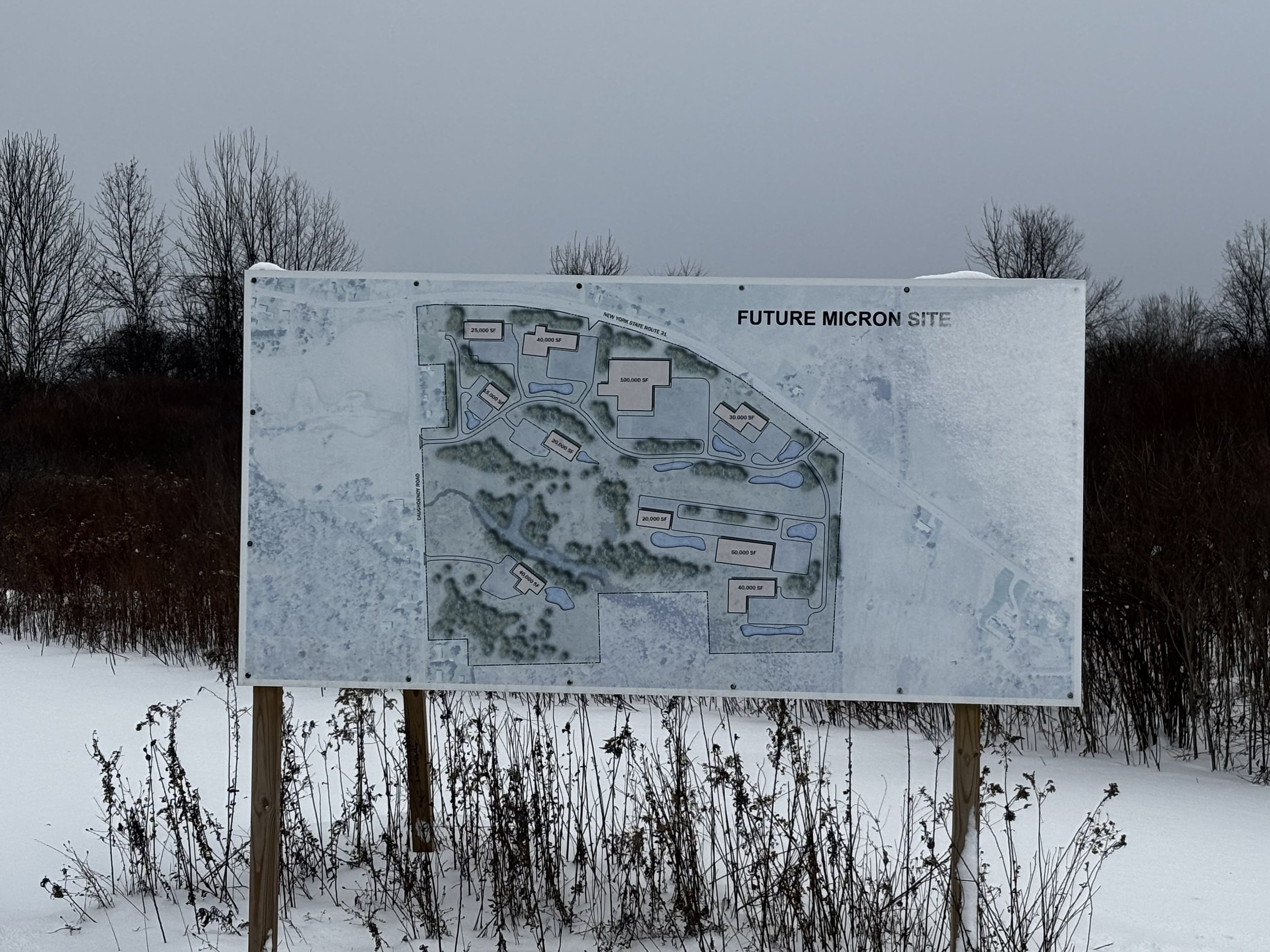
Micron can start clearing trees in the beginning of November, after two species of endangered bats have left the site for their winter hibernation elsewhere. The construction will start on the main campus, known as White Pine Commerce Park, and the rail spur, which will be built on a 36-acre parcel across the road from the chip making site, will be utilized by a train to deliver up to 9 million cubic yards of fill. Founder of Greenies Golf Lounge Brian Soctt, who opened his establishment less than a month ago, said there should be a mutual relationship between Micron and the community.
“Just the integration and the community honestly,” said Scott. “I mean Micron's obviously a huge company, it’s a big deal for the area, but at the same time it’s got to be a good fit. It’s got to be a good fit for the residents here in Clay. It’s got to be a good balance for the businesses.”
Many local owners are hopeful that the project will bring new families, new spending, and new stability to a region that has weathered decades of economic ups and downs. Vannelli said the stakes are high for residents in and around Central New York.
“We just hope for the promise of them coming here,” said Vannelli. “And being positive about it, and having a positive impact with our economy.”
Syracuse University Whitman School Entrepreneurship Professor Mark Coleman said the long-term outcomes of Micron could be transformative for the Central New York Economy.
“What you are going to see is a more well-defined, robust, and diversified economy than the upstate economy has seen in years, perhaps even ever,” said Coleman.
Phase One of the Micron Project is just the beginning of a 16-year timeline estimates all four fabrication plants to be fully completed and operational by 2041. Once the rail spur is complete and the land is fully prepared, Micron will start construction on the first fabrication plant. Vannelli said for nearby businesses, that could mean more customers and more opportunity.
“We’re all anticipating it,” said Vannelli. “We’re all waiting for it. We all know it’s coming, good and bad. But, let’s make it happen fluently. Let’s not go back on promise, let’s get there.”
As Micron prepares to clear land and infrastructure takes shape, the community is starting to grapple with what the project could mean, from rising housing demand to new schools, businesses, and services needed to support an expanding workforce. Scott said he believes the long-term outcomes of Micron could be transformative for the town of Clay, bringing in new residents and steady demand that small businesses rarely see all at once.
“Even the workers and construction folks, they’re going to be brought to the area for the building,” said Scott. “I mean it’s going to give a little boost to probably this whole strip, and so I think that alone is pretty solid.”

Micron reported the requirements under its agreement for $6.1 billion funding deal with the U.S. Department of Commerce recently changed. Vannelli said the official opening of the chip making plant recently being delayed three years, as well as Micron shifting over $1 billion of its federal grant from Clay to their separate proposed plant in Boise, Idaho, is deflating.
“We all want to see that progress here in our community, and it’s something that hasn’t been here for years,” said Vannelli. “All we’ve seen around here is jobs being gone. We’ve seen factories closed. Seeing this coming up and now hearing that it’s being put off is a little discouraging.”
Coleman also said although it’s natural for local business owners to have fear and uncertainty, embracing the Micron project as a partnership will provide a pathway to innovation and growth.
“When we think about that technological future and what Micron is about, we not just at the whim of a large corporation, said Coleman.” “We are intimately involved, and we need to think about ourselves as partners within that future opportunity that’s being brought to us.”
As Micron moves deeper into site preparation, the changes in Clay are only expected to accelerate. For nearby businesses and residents, the early impact is a preview of what could become years of transformation. Whether the project delivers the sweeping economic boost many hope for will unfold over time, with construction of the first fabrication plant anticipated to start in late 2026. For now, the community is navigating a mix of uncertainty and hope, waiting to see how this project will ultimately shape the future of Clay and the greater Central New York region.